Wednesday, September 11, 2013

Alice Carr de Creeft: Sculptor

Alice Carr de Creeft
Bull
Bronze
c.a. 1930s
h 7 x w 15.5 inches
Alice Robertson Carr de Creeft was a sculptor who developed her skill in crafting animals, most notably horses, buffaloes, and bulls. Carr spent her early years in Roanoke, Virginia, until her family relocated to Sun River Valley in Montana. After completing high school in Seattle, Washington, she attended the Art Students League of New York(1919-1920) and the Art Institute of Chicago (1922-1923). She later spent three years in Paris during the years 1926-1929 during which time she studied at the Grande Chaumiere and Ecole des Animalieres and direct carving with Jose de Creeft, whom she married in 1928. During their nine-year marriage, the de Creefts divided their time between the island of Mallorca and NYC, ultimately settling in Santa Barbara, California. In addition to raising three children, de Creeft continued to sculpt.

Primarily a sculptor of animals, de Creeft focused on horses in particular. In 1921, she completed Stirrups, a model of a thoroughbred stallion. In later years she fell in love with Zamal, a desert-bred Arabian stallion owned by Sunical Ranch in San Simeon, California. [1] In 1928, while in Europe, de Creeft arrived at the studio of artist/printmaker Stanley William Hayter to buy some of his prints. A week later she and a friend revisited Hayter with a request that he teach them printmaking techniques. Intending to discourage, Hayter claimed that he didn't have a press or the equipment necessary to teach them, however, if there were two more people interested in learning, he might consider it.
A week later they were back with two others and persuaded Hayter to set up a workshop to learn the craft.

Her husband, Jose, was a sculptor who was largely responsible for the re-introduction of the direct-carving technique. He was commissioned to create a bronze statue of Alice in Wonderland in New York's Central Park. [2] Their daughter, Donna, was the model for the Alice figure.


                                                            Inauguration, 1959, Central Park
                                                          Jose de Creeft and daughter, Donna

Alice de Creeft completed additional commissions, including sculptures of other horses, most notably, Secretariat in 1973. Of her western pieces, de Creeft did studies of buffaloes while she was in living in Seattle. Her sculpture, Bull (seen above) and a variety of other statues were created for Santa Barbara County ranchers. Beginning in the 1960s, de Creeft added rodeo subjects to her western themes.

Alice Carr de Creeft
On the Hunt
Bronze
c.a. 1930s
15.50 x 19 x 7.50 inches
During the 1970s de Creeft taught at the Santa Barbara Art Institute.  Her exhibitions include those of the Studio Club, New York; Artists of the Pacific Northwest, Seattle; Seattle Fine Arts Society, Seattle; Stockbridge Art Association, Massachusetts; Santa Barbara Artists; Artists of Los Angeles; and the Los Angeles County Fair. Her work is in the collections of the Museum of Pollensa, Mallorca, Spain; National Art Museum of Sport, New York; River Edge Foundation, Calgary, Canada; and the Santa Barbara Museum of Art, Santa Barbara, California.

Alice de Creeft  died in Santa Barbara on Aug. 2, 1996.

Her daughter, Nina de Creeft Ward, actively an artist in her own right, works out of Santa Barbara in Southern California. She enjoys sculpting and monoprint. Here is the url to her website: http://ninadecreeftward.com/links.html.

An addendum to the above: I received an email from Barbara Decreeft who informed me that 

"Donna de Creeft, the girl in the photo of the "Alice in Wonderland" sculpture, is the daughter of Jose de Creeft and Lorrie Goulet de Creeft ...Donna is the half sister of Nina de Creeft Ward. Nins is the daughter of Alice de Creeft." 
Thank you Barbara for the additional information!_____________________________________________
1. Phil Kovinick and Marian Yoshiki-Kovinick, An Encyclopedia of Women Artists of the American West (Austin: University of Texas Press, 1998), 71-72.
2. "Alice in Wonderland", centralpark2000.com. (Retrieved September 11, 2013).


Friday, August 30, 2013

Agnes Gabrielle Tait: Model, Writer, Illustrator, and Muralist

Agnes Tait
Peter A. Juley & Son Collection,
Smithsonian American Art Museum
Agnes Tait grew up in New York and, at the age of fourteen, entered the National Academy of Design. During the next five years she studied with a variety of artists until her mother's death for which she took a sabbatical from her studies. When she returned to the academy, Tait took a life drawing class taught by Leon Kroll, whose emphasis on craftsmanship and balanced design was a major influence on her own work.

While pursuing her career in the city, she worked as an artist's model for the illustrator Tenny Johnson and for George Bellows, created murals in Cooperstown, New York, wrote and illustrated a children's book and completed a commission to paint the girls of the Ziegfeld Follies.

In 1927, she went abroad and studied at the École des Beaux-Arts where she learned lithography. The following year she returned to New York, where she had her first exhibition at the Dudensing Galleries. Agnes Tait first explored lithography during the Depression era of the 1930s. She was frequently employed as a mural painter, most notably for Manhattan's Bellevue Hospital. Tait traveled to Europe a second time in the early 1930s and returned via Haiti and Jamaica, which fostered an interest in tropical scenes. Her first solo exhibition, of portraits, took place in 1932 at the Ferargil Galleries. [1]
Agnes Tait
Untitled (Jamaican Scene)
c.a. 1933
Lithograph
10 1/2 x 14 1/4 inches
Smithsonian American Art Musuem

Agnes Tait
Delphinia
c.a. 1940
Lithograph
14 x 10 inches
Private Collection
Tait married in 1933 to journalist William McNulty. The following year, she was employed as a painter under the Public Works of Art Project during which she executed what is considered her most famous work, Skating in Central Park.

Agnes Tait,
Skating in Central Park
c.a. 1934
Oil on canvas
33 3/4 x 48 inches
Smithsonian American Art Museum
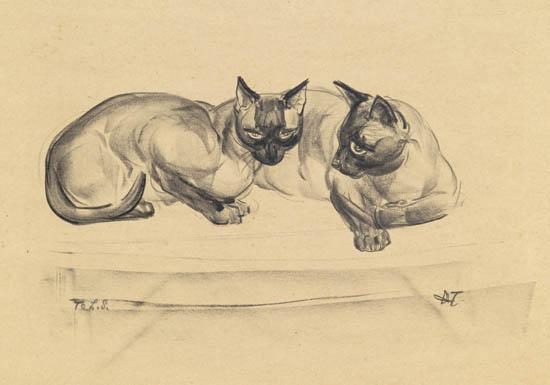
Throughout the 1930s, Tait worked on small lithographic editions and mural work. In 1941 she and her husband relocated to Santa Fe, New Mexico where she remained a resident until her death. While living in Santa Fe, Tait did a number of commissioned portraits and studies of cats.

Agnes Tait
Siamese Cats
c.a. 1925
7 x 12 inches
Oil pastels on cream wove paper 
Private Collection 
 

Agnes focused much of her attention on northern New Mexico, particularly its landscapes, adobes and churches, and various ethnic groups. Her lithographs, watercolors, oils and works in other media included titles such as Lane in Santa Fe; El Christo Rey; Sanctuario de Chimayo; Little Navaho; Pilgrimage to Chimayo; Canyon Coral, and Pecos Valley. [2] She also completed two murals during her time in Santa Fe-one, notably for the Frist National Bank of Santa Fe that depicted the entry of General Stephen Watts Kearny into the city during the Mexican War which she completed in 1953.
 
 
Agnes Tait
Summerstorm
c.a. N.D.
No size given
Oil on canvas
                                                        
Tait exhibited at a number of shows in the east and in the west. Collections of her works are in the New Public Library and Metropolitan Museum of Art in New York, Library of Congress, National Museum of American Art in Washington, D.C., Yale University, Wichita Art Museum, Roswell Museum and Art Center, Museum of New Mexico, and School of American Research, Santa Fe.
Tait was a member and exhibitor in 1936 of the National Association of Women, a seven-time exhibitor at the Art Institute of Chicago between 1915 and 1936, an exhibitor in three annual exhibitions of the Pennsylvania Academy, and in four annual exhibitions of the National Academy of Design.  Other exhibition venues were the New York World's Fair in 1939, Weyhe Gallery, New York City in 1973 and the Los Angeles County Museum of Art in 1976.


Agnes Tait, Adobe church with figures and bonfires
Agnes Tait
Adobe Church with Figures and Bonfires
c.a. N.D.
Lithograph
8 3/4 x 11 3/4 inches
Private Collection

_______________________________________________________________
1. Agnes Tait, Biography, Smithsonian American Art Museum and the Renwick Gallery, http://americanart.si.edu/collections/search/artist/?id=4732, retrieved August 28, 2013.
2. Phil Kovinick and Marian Yoshiki-Kovinick, An Encyclopedia of Women Artists of the American West (Austin: University of Texas Press, 1998), 297.
Other Sources
-Mutual Art, http://www.mutualart.com/Artist/Agnes-Tait/946FA2AAFFD50341/Artworks
-ArtFact, http://www.artfact.com/artist/tait-agnes-eiyev7kwjr
-Patricia Trenton, ed. Independent Spirits: Women Painters of the American West, 1890-1945, (Los Angeles: Autry Museum of Western Heritage in association with the University of California Press, 1995).


Monday, August 12, 2013

Lillian Prest Ferguson: Painter, Potter, Educator

Lillian Prest Ferguson
Still Life
ca. N.D.
Oil on canvas on Masonite
 24 x 19 3/4 inches 
Lillian Prest Ferguson was born in Windsor, Ontario, Canada in 1867, and grew up in Windsor, St. Boniface, and Winnipeg. She attended a convent school where she began some of her formal art training. At sixteen, she received a commission to paint portraits of the parents of St. Boniface school.

Lillian continued to study art in Toronto and later, while teaching at the Winnipeg school of art, she met Peter Ferguson, a lawyer, and they married in 1866. After several months in England, Scotland, and France, where Ferguson studied with Jules Lefebvre at the Academie Julian, the couple immigrated to the United States.

Initially, the Fergusons settled in Riverside, California in 1887. With the advent of the transcontinental railroad in 1869, land speculators, developers, and colonists began to swarm to Southern California where there was plenty of inexpensive, available land. However, opportunities to work as an artist were few, so the Fergusons moved to the city of Los Angeles around 1900.

Lillian Prest Ferguson
Carmel by the Sea
ca. N.D.
Oil on canvas
 20 x 24 inches
While her official "residence" was Los Angeles, she traveled to Europe to study in Holland during the years 1911-1912, spent the summer of 1914 in Carmel at William M. Chase's class, and at the University of Southern California. After her husband's death in 1918, Ferguson spent a decade in Laguna Beach. She was a charter member of the Laguna Beach Art Association and a founder of the group Women Painters of the West. She was an active exhibitor with both groups in addition to participating in shows with the California Art Club, Artists of the Southwest. In northern California she showed at the Berkeley League of Fine Arts, the  California State Fair, Sacramento, and the Santa Cruz Art League.

In addition to painting, the artist was a highly respected potter who operated one of the first kilns in Laguna Beach in 1920. Generally painting from life using oils, pastels, and watercolor, Ferguson also did portraits of the various ethnic groups that lived in southern California. She also enjoyed painting and drawing florals, missions, and landscapes along the coast of California.


All source material from Kovick's An Encyclopedia of Women Artists of the American West.
Photographs from icollector.com, askart.com, and artnet.com

Tuesday, July 30, 2013

Avis Chitwood: Local Kansan Artist

Avis Chitwood
Early Photograph
c.a. N.D.
Kansas Museum of History
Avis Chitwood was an artist who began to create at a young age and spent nearly one hundred years at her craft. Her interests ranged from etching, painting in oils and watercolor, to architecture and graphic design, however, she is best known for her lovely paintings of wildflowers and drawings of the rustic buildings, bridges, missions, and native birds of Kansas.

Chitwood grew up in Mound City, Kansas and Kansas City, Missouri where she graduated from high school and served a four-year apprenticeship in an art studio there. In 1922, Avis settled in Topeka where she spent twelve years in an arts and crafts shop perfecting her watercolor technique and ceramic decoration. She studied at Washburn College (now University) and taught there for a time as well. Chitwood continued her studies in art and architecture at the University of Kansas in Lawrence and taught etching in adult education classes. She claimed: "the strong contrast of black and white has a dignity and strength that appeals to me."[1] In addition, Chitwood worked as an artist and draftsperson for the Kansas State Highway Commission during the years 1948 to 1974. [2]

In 1941, Chitwood and fellow artist Margaret Whittemore (featured previous artist) traveled across Kansas sketching birds, wildflowers, and other points of interest. Their collaborative work became serigraphs and lithographs that were popular collectables.


Wittemore and Chitwood
Shawnee Mission, 1885
ca. 1941-1942
Six -color process Lithograph
Avis Chitwood was a frequent exhibitor in Topeka between 1922 and 1940 where she won numerous first and second prizes in etchings, china painting, and block prints. She was represented at the Midwestern Artists' Exhibition, Kansas City, MO (1936) and held one person shows at Kansas State College, Manhattan (1944), and the Brewster Gallery, Topeka (1965, 1967). [3] Among these accolades, Chitwood was proudest of her copper plate engraving entitled "Carousel" being exhibited at the Nelson-Atkins Museum of Art in Kansas City. She never stopped creating art, and was still drawing up to her death in Topeka at the age of 100.

Avis Chitwood
 Woodland Phlox, Ragwort and Dogface Butterfly
Painted block print
ca. N.D.
 10 x 8 inches


                                                                                                                    Avis Chitwood
                                                                                                                                   Wildroses and Spiderworts
                                                                                                                                         Painted Block Print
                                                                                                                                                c.a. N.D.
                                                                                                                                            10 x 8 inches

                                                                   Avis Chitwood
                                                                           Old Halliburton Mill
                                                                                       Etching
                                                                               c.a. Early 1900s
                                             Spencer Museum of Art: Letha Churchill Walker Memorial Art


The only photograph I could locate of Chitwood as an adult is found here: http://www.flickr.com/photos/topekalibrary/2919087675/.  The photograph was taken in 1965 when she was 71 years old and shows Avis Chitwood surrounded by her artwork. Chitwood's illustrations for publications of the State Highway Commission, Capper's Household Magazine, and other local periodicals, advertised the beauty of Kansas-the "best kept secret!"

________________________________________________________________

1. Avis Chitwood, Kansapedia: Kansas Historical Society, http://www.kshs.org/kansapedia/cool-things-dress-from-artist-s-childhood/15114. (retrieved July 28, 2013).
2. Phil Kovnick and Marian Noshiki-Kovnick, An Encyclopedia of Women Artists of the American West, (Austin: University of Texas Press, 1998). 46-47.
3. Ibid.
 

Friday, July 19, 2013

Kansas: Best Kept Secret


View 20130713_105130_resized.jpg in slide show
OZ Museum
Wamego Kansas
c.a. 2013
I haven't written anything for several weeks because I've been fortunate to do some travelling in early summer. I spent 10 days in Colorado (Denver and Breckenridge), then one week going to and from Manhattan, Kansas, the town to which my son has relocated. During both ventures I saw beautiful scenery, a lot of public art, and unique pieces and artifacts-most notably in the Clyfford Still museum in Denver and the OZ (as in Wizard of...) museum in Wamego, Kansas. Since this blog is about women artists in the West, you'll have to investigate both the Still and Oz museums on your own, but as Kansas was the frontier at one time, I'm going to salute some of the female artists who were born or worked in Kansas back in the day.

A Pioneer Family in Loup Valley, Nebraska
c.a. 1886
Photographs of the American West, 1861-1912
National Archives, Washington, D.C.
In an earlier post, I discussed women's art and how they expressed themselves creatively. As homesteaders, heading into unknown, and at times, unexplored territory in order to start new lives as single or married women, with or without children, the future was unknown. Unlike Europe or the older, established Eastern cities, women had an extremely difficult life on the Prairie and lived much of the time on their own. Men and older boys of the household spent their days from dawn to dusk farming, so women were left to cook and clean dusty sod houses, care for children, and to take care of whatever business was at hand. Harsh conditions meant that children were often sick and the lack of doctors, along with the distance from medical care, saw women, out of necessity, learning to solve their own problems. Unfortunately, for many of them, the isolation was too much to bear.

 
19th Century Trapunto and Applique Cotton Quilt
 
In addition, societal constraints discouraged or forbade women from pursuing careers that were not considered appropriate for them beyond teaching. In the early nineteenth century, families were moving via horseback and covered wagon, space was considerably limited, so most of the art created by women had to be of practical use as well. Quilts were not only beautiful, they were narratives, along with serving as bed or window coverings. Crafting pottery provided an artistic outlet and was useful as well.

By the end of the 19th century, at the close of the frontier, women were painting, but, in many cases, signed their names with just an initial to circumvent the gender bias that was rampant at the time. Some, however, became enormously successful, and were able to support themselves and their families from their artistic endeavors.


Margaret Whittemore (1897 – 1983) grew up in Topeka, Kansas. Her father was a professor of Latin and education and her mother was director of the art department at Washburn College (now University), Topeka. Margaret attended Washburn and graduated in 1919. She went on to the School of AIC from 1920-1923, where she specialized in Graphic Art. In addition, Whittemore also studied graphic arts at the Art Institute of Chicago and at the Taos Art Colony in New Mexico.She taught art at the Bethany College in Lindsborg, Kansas (1927), and served as the editor of The Palette, the national publication of the honorary art fraternity Delta Phi Delta (1928-1935). [1]

She developed a reputation as a writer, graphic artist, illustrator, and block printer. Whittemore worked as an artist in the Works Progress Administration museum extension program and created a series of prints depicting Kansas landmarks. Whittemore was also a member of the Prairie Print Makers. Formed in Lindsborg in 1930 at the studio of artist Birger SandzĂ©n, the group sought to work beyond the stereotype of the Midwest and depict a realistic view of everyday life. Eventually more than 100 amateur and professional artists joined the group throughout North America. [2]
 
Margaret Whittemore
Fort Hays Block House, Council Grove, KS
c.a. n.d.
Woodblock print

Western themes, particularly those of Kansas, dominated Whittmore's work. Whittemore had quite a diverse work experience. She worked as a drafter for the Atchison, Topeka & Santa Fe Railway. In 1936 she published a series of sketches of early Kansas landmarks in Sunday issues of the Topeka Daily Capital. She wrote descriptions and histories of the landmarks to accompany the pencil sketches. In 1954 she published the book, Historic Kansas: A Centenary Sketchbook. She worked at University of Kansas, Clay Center Library, Wichita Public Library, Kansas Historical Society, and Topeka Public Library. [3]


Whittemore produced watercolors for the Department of Agriculture’s Kansas Birds publication. She also designed book plates for library (some of these are in the Special Collections archives.) Her 1954 book Historic Kansas: A Centenary Sketchbook from Kansas University Press won “top honor book” for the 6th annual exhibit at Chicago and Midwestern bookmaking at the Chicago Public Library, for printing and binding excellence. [4] Her work as an artist/illustrator also includes Adventures in Thrift,1946; woodcuts, Trees, by Bruce Humphries; Bird Notes, by H.L. Rhodes, 1932. She was a contributor to Audubon, Scholastic, American Magazine Art, Christian Science Monitor, Kansas Farmer, and Kansas City Star.

Margaret Whittemore
Buttressed Barn near Lawrence, Kansas
19th and Iowa streets near the University of Kansas
ca. n.d.

Whittemore relocated to Florida in 1955, but continued to contribute to the Topeka Daily Capital newspaper. Her book Chimney Swifts and their Relatives was written while she lived in Florida and was published by Nature Book Publishers in 1981. Undaunted, Whittmore used a motorized wheelchair to get around and continued to work until her death in 1983.

1.  Phil Kovnick and Marian Noshiki-Kovnick, An Encyclopedia of Women Artists of the American West, (Austin: University of Texas Press, 1998). 329.
2. Kansapedia, Kansas Historical Society, "Margaret Whittemore," http://www.kshs.org/kansapedia/margaret-whittemore/15554, retrieved July 19, 2013.
3. Ibid.
4. Flickr, "Margaret Whittemore, Kansas Impressions," http://www.flickr.com/photos/topekalibrary/2919162527/,  retrieved July 19, 2013.

Tuesday, June 18, 2013

Joane Cromwell: Painter of the California Coast

Joane Cromwell
Laguna Beach
ca. n.d.
Oil on canvas
14 x 18 inches
Artist and muralist, Joane Cromwell (1895-1969), lived most of her life on the West Coast. Born Catherine Strode, she grew up in Lewistown, Illinois, and graduated with honors from the School of the Art Institute of Chicago in 1916. Later, following a brief marriage in 1917, Cromwell settled in Laguna Beach with her mother where, several years later for professional reasons, she adopted the name Joane Cromwell. Her studio atop Temple Hills provided a commanding view of the Pacific Ocean and the gorgeous Laguna landscape. [1]


To continue her art education, Cromwell moved north to Los Angeles to study at the Otis Art Institute, from which she graduated in 1929. After continued study with Edgar A. Payne, George DeMont Otis, and Jack Wilkinson Smith, she returned to Laguna Beach with her husband, Joseph Skidmore, in 1936. Her technique is painterly, as she employs broad strokes and texture in her work.

Joane Cromwell
Flowers for his Majesty's Feet (Mt. San Jacinto), Painted near Palm Springs, California
Oil on canvas
ca. n.d.
28' inches x 36 inches 
MutualArt.com
Joane Cromwell spent her early career painting local coastal landscapes and later, desert scenes. Her mural work included art for the Santa Anita Race track in 1939, and for the Hollywood Park Race Track in Inglewood, in 1942. One of her large pieces, an oil painting of San Juan Capistrano, was owned by J. Edgar Hoover, and graced the wall over the desk in his office in the F.B.I. building in Washington, D.C.

Joane Cromwell
A Laguna Landmark Passes
Oil on canvas
ca. n.d.
16 inches x 20 inches
CaliforniaArtAuction.com 
The artist, who received an honorable mention at an AIC show in 1918, later hung works at exhibitions of the Laguna Beach Art Association; Illinois State Museum, Springfield; Artists' Fiesta, Los Angeles, Desert Inn Gallery, Palm Springs, Artists of Southern California, San Diego; and Springville Museum of Art, Utah. Cromwell had a one-woman show at the La Jolla Art Club (California in 1942. In addition, she is represented in the collection of the Laguna Beach Chamber of Commerce. [2]  A prolific painter, over four hundred of her works are owned by patrons and collectors in the United States and abroad.

Joane Cromwell
Festival of Arts, Laguna
ca. 1936
Oil on canvas
23 x 27 inches

Joane Cromwell
Tanglewood
ca. n.d.
Oil on canvas
24 inches x 30 inches
_________________________________
1. Joane Cromwell, Stewart Galleries, http://www.stewartgalleries.com/JoaneCromwell.htm, (accessed June 18, 2013).
2. Kovinick, Phil and Marion Yoshiki Kovinick, An Encyclopedia of Women Artists of the American West, (Austin: University of Texas Press, 1998), p. 60.

Thursday, June 6, 2013

Vicki Snyder Sonstegard: A Life in Art

 
LACMA and Urban Light
ca. 2012
Digital Image
 If you're interested, this blog post is a bit about me and some examples of my work. I have an art and music background and I majored in art at California State University, Northridge. I spent the summer after graduation as an intern at Nickelodeon, drawing The Angry Beavers. I loved it, but my son was only eight years old and the demands of the job forced me to make a change. I ended up in education, at a school right by my home--perfect for all of us. I earned a Master's degree in Curriculum and Instruction with an emphasis in Education Technology. It was just the right program because, at that time, I was working as a computer specialist and taught Enrichment classes and G.A.T.E students along with my responsibilities as a school site computer technician! I've taught high school and community college Art, Life Drawing, Advanced Placement Art and Art History, and Computer Graphics. With the support of my family, I was able to work on that terminal degree. I finished my thesis on six female artists working during the early twentieth century, and was awarded the degree of Doctor of Philosophy in Cultural Art History in February of this year.

So, as a women artist who lives in the west, I'd like to share some of my work. I enjoy photography, drawing, and painting and I love to photograph urban scenes. Here are some photos from San Francisco, Northern California, and in and around Los Angeles.

Window, SFMOMA
San Francisco, California
ca. 2012
Digital Image
I moved to California in 1978 and have been working variously as a graphic artist, illustrator, and art educator since then. I've done a number of logos, and am been fortunate to have been published, as well.  I prefer to draw and paint people, but I love to shoot architecture and the juxtoposition of the old and the new-mostly new here in Los Angeles.

Gargoyle
ca. 2013
Digital Image
Adirondack
ca. 2013
Digital Image


Downtown San Francisco
ca. 2012
Digital Image

Winery Wall
Napa Valley, California
ca. 2012
Digital Image


Roman Statue, View Two
Getty Villa, Malibu, California
ca. 2011
Digital Image

  
Roman Statue, View One
Getty Villa, Malibu, California
ca. 2011
Digital Image


LACMA Courtyard
Los Angeles, California
ca. 2012
Digital Image
 
Deco Border
Griffith Observatory
Los Angeles, California
ca. 2012
Digital Image

Arches
Griffith Observatory
Los Angeles, California
ca. 2012
Digital Image


Hollywood Gargoyle
Hollywood, California
ca. 2012
Digital Image


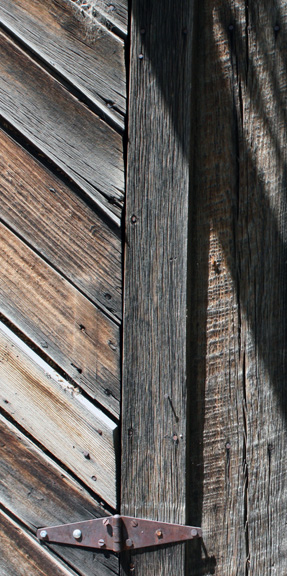
Door
Gardnerville, Nevada
ca. 2012
Digital Image

Fence
 Jamestown, Virginia
ca. 2011
Digital Image


Four Buildings
Downtown Los Angeles
ca. 2013
Digital Image

Reflection Two
Downtown Los Angeles
ca. 2013
Digital Image
 
Reflection One
Downtown Los Angeles
ca. 2013
Digital Image


The Conejo Valley
Thousand Oaks, California
ca. 2012
Digital Image
 The last shot is from my back deck on a beautiful, sunny, afternoon. I hope you've enjoyed a random sampling...next post: assorted drawings and paintings.